
NVIDIA’s Alpamayo-R1: The Open AI Model for Reasoning in Self-Driving Cars
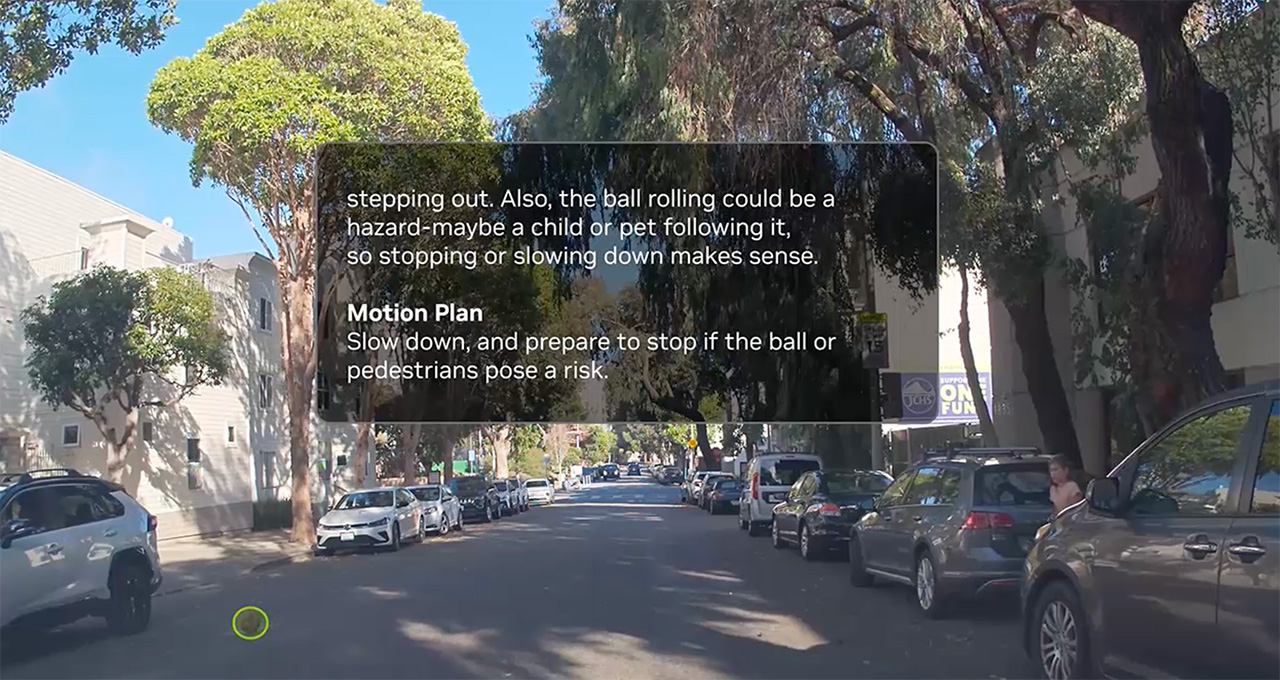
NVIDIA released Alpamayo-R1 at the NeurIPS conference as the Economic Times reports, calling it the world’s first open industry-scale reasoning vision-language-action model for autonomous driving. According to the NVIDIA Blog, this model, part of the NVIDIA DRIVE platform, lets vehicles process visual scenes, explain their choices in plain language, and plan paths.
What Alpamayo-R1 Does
The model combines chain-of-thought reasoning with path planning to handle tough road situations, like crowded pedestrian areas or lane closures. It breaks down scenes step by step, weighs options using context, and picks the safest route.
For instance, in a bike-lane area with pedestrians, Alpamayo-R1 analyzes the path, reasons through risks like jaywalkers, and adjusts—while outputting explanations for each move. As CBT News reports, it turns sensor data into natural-language descriptions of what the vehicle sees and why it acts, making the process easier to check.
- Processes road visuals to reason, describe, and act.
- Generates “thought traces” for transparency.
- Supports post-training with reinforcement learning for better results.
Availability and Supporting Data
You can download Alpamayo-R1 from GitHub and Hugging Face for non-commercial use, like research or testing. NVIDIA also open-sourced the AlpaSim framework to test it and shared a subset of training data via the NVIDIA Physical AI Open Datasets. Reuters reports on this open-source software for self-driving car development.
WinBuzzer points out a related 1,727-hour dataset from 25 countries in the PhysicalAI-Autonomous-Vehicles library—about three times larger than the Waymo Open Dataset—to fuel more work on these models.
Why It Matters for Autonomous Vehicles
Past self-driving systems often acted without clear reasons, creating “black box” issues that slowed fixes. Alpamayo-R1 changes that by mimicking human judgment in complex spots , WebProNews notes, pushing toward level 4 autonomy. NVIDIA says its openness helps developers benchmark, customize, and build safety standards together, speeding up safer AV rollout.